8-month finger strength training program - Abstract
Background: Running a full-time professional career, a family, and a blog leave me with little time do train and sleep for recovery. I can rarely afford to go to the gym, let alone climb outdoors. The bulk of my training consists of hangboarding. In this post, I describe the results of my eight-month hangboard finger strength training program with Steve Bechtel’s 3-6-9 Ladders routine.
Objective: To verify how much I can progress my absolute and relative finger strength while undergoing a weight loss intervention, and under conditions of chronic sleep deprivation.
Design: The hangboard training program consisted of three training cycles. After each cycle, I increased the hang loads. I trained three hold positions, the 14 mm edge full crimp, 14 mm half crimp, and 20 mm 3-finger pocket. I tested my maximum finger strength with 7-second hangs on a 20 mm edge in half crimp position (MVC-7 HC 20).
Results: With the program, I increased my MVC-7 HC 20 absolute strength from 108 kg to 116 kg. During the last training cycle, I managed to reduce my body weight from 65.5 kg to 61 kg through Intermittent Fasting and Low Carbohydrate/Keto Diet. As a result, I increased my relative finger strength from 163.5% to 190%, allowing me to improve from the 7A benchmark to 7B benchmark level on the Moonboard Masters 2017 hold setup.
Conclusions: Hangboard training is an effective and efficient method of improving maximum finger strength. Satisfactory gains can be expected despite inadequate sleep and undergoing a weight loss intervention. Losing weight contributed to the increase of my relative finger strength and allowed me to progress my Moonboard bouldering level significantly.
Hangboard finger strength training - Introduction
Finger strength is one of the most important, if not the most important aspect of sport climbing and bouldering. I found on multiple occasions that a thoroughly executed finger strength cycle on a hangboard allowed me to send projects, on which I’d been stuck for months.
I’ve been hangboarding practically ever since I started climbing, back in 2005. The first hangboard workout I ever tried was the fingerboard moving hangs, described by Eric Hörst in his book “Training for Climbing” 1. It’s basically a strength endurance training routine, and the good thing about it was that it was safe, a significant factor for a beginner climber I was at the time. Still, it was not until 2010 that I became serious about hangboarding and made it the cornerstone of my rock climbing training.
I began experimenting with Hangboard Repeaters, and for a long while, it became the only hangboard exercise I did 2. But in 2018, I noticed that I wasn’t able to add more weight to the hangs any more and that my strength had plateaued. I went out on a search for purely strength-oriented hangboard training methods, and I started with the Eva López MaxHangs 34. The results were pretty impressive, and I began to gain strength quickly. At that point, I read “Logical Progression” by Steve Bechtel, and I became immediately interested in his new approach to rock climbing training 5. If you don’t know who Steve Bechtel is, you can listen to one of his interviews at 6.
Finger strength is the most crucial facet of sport climbing and bouldering. If you’re stuck on a grade, first check if your finger strength is sufficient to progress!
Steve Bechtel's 3-6-9 Ladders finger strength training Cycle 1
According to the protocol instructions, the first thing you should do is to find the load at which you can hang for precisely 12 seconds maximum on each of the grip positions that you want to train 9510. To execute the protocol, I chose the Zlagboard Pro wooden hangboard, because it has a large variety of edges and pockets that are easy to adjust 11. I followed Steve’s advice for people who are not yet familiar with the 3-6-9 Ladders finger strength training routine, and I selected only three grip positions to train, namely:
- Full crimp on a 14 mm edge (FC 14)
- Half crimp on the 14 mm edge (HC 14)
- 3-finger pocket, 20 mm deep (3-p 20)
You can see the Zlagboard Pro with the grip positions I used in Figure 1 below.

For each grip position, I performed a 12-second maximum load assessment (MVC-12). The results were (July 2019):
- FC 14: 90 kg (92% MVC-7)
- 3-p 20: 86 kg (91% MVC-7)
- HC 14: 88 kg (94% MVC-7)
However, when I started training with the protocol, I wasn’t able to complete the final 9-second hangs on the HC 14 grip position. The accumulated fatigue at the end of the protocol impacted my performance. You can also notice that the 12-second hang time loads are relatively heavy, above 90% MVC-7. In particular, the hangs in the HC 14 grip position were quite intense. Based on the models found in the literature, we can state that the correct hang intensity for the Steve Bechtel’s 3-6-9 Ladders protocol should lie between 88 – 95%, so my loads were actually at the high end of the intensity spectrum 121314151617. You can also see that in contrast to the common belief, the loads used in the 3-6-9 Ladders protocol are quite high and sufficient to trigger neural adaptations required to gain finger strength 10.
For this reason, I decided to reduce the loads slightly to be able to execute the entire protocol. In particular, in the later stages, the protocol involved 12-second hangs, and I couldn’t even pull off all the 9-second hangs 5. I also modified the order of the grip positions in the training sequence, because it felt like the hangs in the 3-p grip position were ultimately a little easier than the crimps. After a few trials, I settled for the hang sequence below, and I stuck to it throughout the entire finger strength training Cycle 1:
- FC 14: 89 kg (91% MVC-7)
- HC 14: 86 kg (92% MVC-7)
- 3-p 20: 86 kg (91% MVC-7)
- 3-second hang, rest 30 seconds,
- 6-second hang, rest 60 seconds,
- 9-second hang, rest 3-4 minutes, depending on how hard the sequence felt.
For the 3-6-9-12 sequence, the hang and rest times were the following:
- 3-second hang, rest 30 seconds,
- 6-second hang, rest 60 seconds,
- 9-second hang, rest 60 seconds,
- 12-second hang, rest 3-4 minutes, depending on how hard the sequence felt.
The loads used in the 3-6-9 Ladders finger strength training protocol are not light at all, and reach up to 95% maximum hang intensity!

After completing the protocol, I measured my MVC-7 and MVC-12 loads for the trained grip positions. Below you can see the video from the MCV-7 tests after the first cycle. The complete MVC-7 and MVC-12 test results for the training Cycle 1 are summarized in Table 1 below. You can also see how my MVC-7 changed for the HC 20 and HC 10 grip positions, which I didn’t include in the Bechtel’s Ladders protocol.
| Position | 07.2019 | 10.2019 | Gain |
|---|---|---|---|
| FC 14 (7s) | 98 kg | 103 kg | 5.3% |
| HC 14 (7s) | 94.5 kg | 99 kg | 4.8% |
| 3-p 20 (7s) | 93 kg | 98 kg | 5.3% |
| FC 14 (12s) | 91 kg | 96 kg | 5.5% |
| HC 14 (12s) | 88 kg | 94 kg | 6.9% |
| 3-p 20 (12s) | 86 kg | 95 kg | 10.5% |
| HC 20 (7s) | 108 kg | 111 kg | 2.8% |
| HC 10 (7s) | 88 kg | 91 kg | 3.4% |
| HC 20 (12s) | 102 kg | 105 kg | 2.9% |
| HC 10 (12s) | 82 kg | 84 kg | 2.4% |
| Average | 93.0 kg | 98 kg | 4.9% |
My 3-6-9 Ladders protocol finger strength training progress - training Cycle 2
I found the results of the 3-6-9 Ladders climbing training Cycle 1 to be surprisingly good, taking into account that the protocol didn’t feel very straining and that I’d taken a two-week break in-between. Therefore, I decided to execute a second cycle of the Ladders protocol, with loads increased to:
- FC 14: 93 kg (90% MVC-7)
- HC 14: 90 kg (91% MVC-7)
- 3-p 20: 90 kg (92% MVC-7)
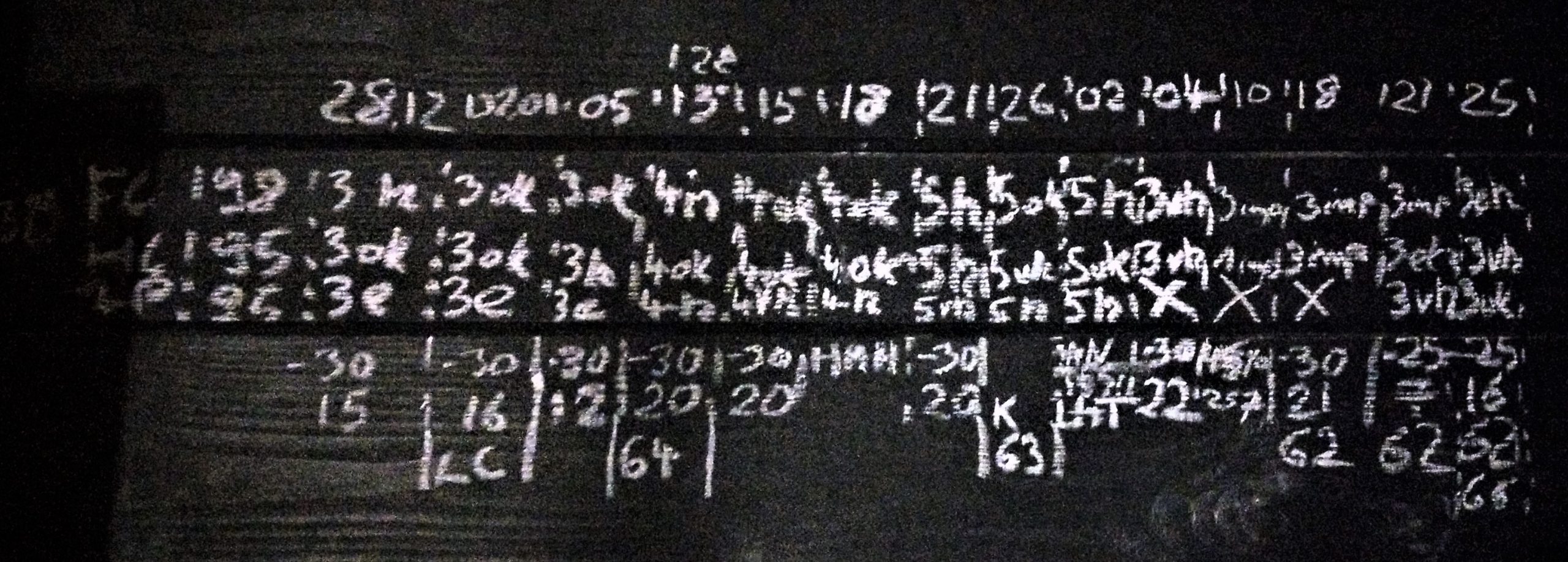
The training loads in the second training cycle were about 4.6% higher than those in July, but they still lied between 90 – 92% MVC-7, which at that point seemed to be the optimum for me. I carried out the second 3-6-9 Ladders finger strength climbing training protocol in thirteen sessions between the 23.10 – 20.12. A photo of my second finger strength training cycle log is shown in Figure 3.
You can see that I used a little trick during the last training session (20.12), which involved 12-second hangs. Namely, I increased the loads by 2 kg for each grip position, to maximize the gains from the protocol. I assumed that this approach would allow me to start the next training cycle with a higher load increase.

| Position | 10.2019 | 12.2019 | Gain |
|---|---|---|---|
| FC 14 (7s) | 103 kg | 106 kg | 2.9% |
| HC 14 (7s) | 99 kg | 104 kg | 5.1% |
| 3-p 20 (7s) | 98 kg | 103 kg | 5.1% |
| FC 14 (12s) | 96 kg | 100 kg | 4.2% |
| HC 14 (12s) | 94 kg | 100 kg | 6.3% |
| 3-p 20 (12s) | 95 kg | 98 kg | 3.2% |
| HC 20 (7s) | 111 kg | 114 kg | 2.7% |
| HC 10 (7s) | 91 kg | 93 kg | 2.2% |
| HC 20 (12s) | 105 kg | 107 kg | 1.9% |
| HC 10 (12s) | 98 kg | 101 kg | 1.8% |
| Average | 97.6 kg | 101.1 kg | 3.5% |
My 3-6-9 Ladders protocol finger strength training progress - training Cycle 3
- FC 14: 98 kg (92% MVC-7)
- HC 14: 95 kg (91% MVC-7)
- 3-p 20: 95 kg (92% MVC-7)

| Position | 10.2019 | 12.2019 | Gain |
|---|---|---|---|
| FC 14 (7s) | 103 kg | 106 kg | 2.9% |
| HC 14 (7s) | 99 kg | 104 kg | 5.1% |
| 3-p 20 (7s) | 98 kg | 103 kg | 5.1% |
| FC 14 (12s) | 96 kg | 100 kg | 4.2% |
| HC 14 (12s) | 94 kg | 100 kg | 6.3% |
| 3-p 20 (12s) | 95 kg | 98 kg | 3.2% |
| HC 20 (7s) | 111 kg | 114 kg | 2.7% |
| HC 10 (7s) | 91 kg | 93 kg | 2.2% |
| HC 20 (12s) | 105 kg | 107 kg | 1.9% |
| HC 10 (12s) | 98 kg | 101 kg | 1.8% |
| Average | 97.6 kg | 101.1 kg | 3.5% |
Bechtel's 3-6-9 Ladders volume progression
From the plot, we can see that I reached the highest total training volume in Cycle 1 because it was also the longest one and consisted of eighteen sessions. The volumes in Cycle 2 and Cycle 3 were almost the same. I managed to achieve the highest average volume per session in Cycle 2. In Cycle 3, I had trouble towards the end when I had to execute the 12-second hangs. For this reason, I was unable to complete some of the sessions, and that resulted in a lower average.
The drop in my performance does not seem related to my Keto Diet and the accompanying liver and muscle glycogen stores depletion. Undernourishment and depleted glycogen have been shown to negatively impact muscle strength 18, but I’d finished the keto period a week before. By then, my glycogen stores had already been replenished, which will be discussed in the following sections.
I believe that the reason for my inability to complete the 12-second hangs during the first three sessions in Cycle 3 was the fact that the loads chosen at the beginning of the protocol were slightly too high. At that point, I was already reaching a plateau, and on top of that, I was losing weight, which made it more difficult to adapt to the sudden increase in the protocol difficulty. These few lower volume sessions did not change the fact that I did achieve some progress in Cycle 3, but in hindsight, I think I should have added less weight to my harness.
When designing your 3-6-9 Ladders cycles, Steve Bechtel advises going for loads with which you can hang for 12 seconds 5. But if this indeed is your maximum, then the shift from 9-second hangs to 12-second hangs towards the end of the cycle becomes very abrupt and may prove too much to handle. Therefore, I think it’s better to give yourself at least 2 – 5 seconds of safety margin. This means selecting loads with which you can hang for 14 – 17 seconds, corresponding to roughly 90 – 92% of your MVC-7 on the given hold.
Continuous Energy Restriction
During the third training cycle, I decided to turn things up a notch and to combine my finger strength training with simultaneous weight loss. After all, the goal of strength training for climbing is to improve finger strength relative to body weight. I was curious if weight loss would compromise my gains, and whether it would be possible for me to improve despite being on a dietary regimen.
The most commonly implemented weight loss strategy is continuous energy restriction (CER) 19. CER is based on keeping the daily energy intake below the weight maintenance requirements 20. Still, athletes who undergo continuous energy restriction and are subjected to high training loads are running the risk of losing fat-free mass, leading to lowered performance because of reduced muscle strength and glycogen stores, impaired reflexes, and increased irritability 2122. Because of these potentially adverse effects I was motivated to look for alternative weight loss strategies.
Intermittent Fasting, Keto Diet and Low Carb Diets
Recently intermittent fasting started to receive a lot of attention as an alternative to conventional dietary weight loss strategies 2324. One of the most notable advantages of Intermittent Fasting over uniform caloric restriction from the athletes’ point of view is that unlike the uniform caloric restriction, which produces loss of both muscle mass and fat tissue, Intermittent Fasting reduces the fat tissue, but preserves the muscle mass 252627.
The Ketogenic Diet (KD), which is a stricter version of what is generally known as the Low Carb Diets (LChD) is another weight loss strategy that is recently very popular. I first heard of the Keto Diet when I listened to the Trainingbeta podcast with Neil Gresham. In the interview, Neil claimed that a temporary reduction of carbohydrate intake helped him lose weight without feeling hungry while maintaining high energy levels. He also said that his recovery was significantly enhanced and that “no single thing has ever made such a big difference in his climbing as this diet” 28.
That sounded almost too good to be true, so it immediately caught my attention, and I decided to learn more about this unorthodox nutrition strategy. It was only later that I learned Dave MacLeod also practiced fasting and Keto Diet to achieve weight loss when preparing for his projects 29. The LChD diet and Intermittent Fasting, in particular, became the cornerstone of my weight loss strategy.
Details of the dietary regimen
Before Cycle 3, I did not make any conscious effort to reduce my body weight. I ate a regular western diet, based on a mix of fats, protein, and carbohydrates. I also did not take any additional protein in the form of whey during any of the cycles. In Cycle 3, I started to reduce my daily caloric intake through Intermittent Fasting. I ate two meals a day, one at 10 a.m. and the other one at around 4 – 6 p.m. I did not calculate the exact calorific value of each meal, but on average, it was probably around 700 kcal.
The good thing about IF is that you can limit the energy intake naturally, without the need to count calories. After about a week I started to reduce the amount of carbohydrates in my diet in favor of fats and proteins and followed up with a two-week period of pure Ketogenic Diet. I subsequently returned to a regular diet and the Intermittent Fasting two meals a day plan, which has since been my daily food regimen.

During the seven weeks of my dietary intervention, I was able to lose 4.5 kg, which amounted to 6.9% of my initial body weight. I tried to keep track of my body fat percentage and the percentage of my lean body mass (LBM), but unfortunately, the OMRON BF511 body composition monitor I have does not seem to be accurate enough to provide any meaningful insight. At the beginning of Cycle 3, at 65.5 kg bodyweight, my measured body fat percentage was 6%, which I think must have been largely underestimated, and should likely be above 10%.
This goes against the results published in 30, where it is claimed that the OMRON BF-511 has the tendency to overestimate BF%. However, the result is consistent with the findings published in other research papers, which show that Bioelectric Impedance Analysis is indeed likely to underestimate the BF%, and the standard error can be as high as 10% 3132. After losing 2 kg, my measured BF% dropped below 5%, triggering an “Err4” output. According to the manual, this indicates “Values of body composition are out of measurable range” 33. Thus further monitoring of my body composition became impossible with the available equipment.
The plot of my body weight before, during and after the dietary intervention period is shown in Figure 7. The initial short Intermittent Fasting week resulted in a weight loss rate of about -0.5 kg/week. After reducing the carbohydrate intake, I suddenly lost 1 kg within only three days. This abrupt weight loss was due to the depletion of my liver glycogen stores 3435. Once the glycogen stores became depleted, my weight loss rate became -0.54 kg/week during the low carbohydrate diet period (LChD), and -0.78 kg/week during the Keto Diet (KD).
After returning to my regular diet, which included carbohydrates, I almost immediately regained 2 kg. That again was water weight bound by the restored glycogen coming from consumed carbohydrates 3635. Based on these results, I estimated that I have effectively lost about 2 kg body weight, which may have included some muscle mass, but probably was mostly fat. My diet lasted about 45 days, during which I consumed roughly 1500 kcal per day. My daily caloric intake for weight maintenance is around 1800 kcal 37. That means that for 45 days, I created an average energy deficit of 300 kcal/day, which amounts to 13500 kcal, and that’s about 2 kg of fat. This makes sense.

Adverse effects of sleep deficit on strength gains
Sufficient sleep is a critical factor when it comes to cognitive function, development of the central nervous system (CNS), and physical recovery 3839. Sleep deprivation was shown to lead to unhealthy food cravings and impairments in glucose sensitivity. On top of that, insufficient sleep also negatively affects growth hormone and cortisol secretion 40. Therefore, lack of adequate sleep could hamper glycogen repletion and potentially affect appetite, food intake, and protein synthesis 41. One of the pioneers of sleep research, Allan Rechtschaffen, stated that ‘If sleep does not serve an absolute vital function, then it is the biggest mistake the evolutionary process ever made.’ 42.
If sleep does not serve an absolute vital function, then it is the biggest mistake the evolutionary process ever made.
Allan Rechtschaffen
Impaired testosterone production leads to sub-optimal muscle regeneration
Testosterone is key to skeletal muscle mass regulation and muscle protein synthesis production 46. It is also responsible for the repression of genes that activate protein breakdown 47. Testosterone levels increase as sleep begins and reach their highest point after the first REM sleep cycle. You need at least three hours of normal sleep to experience this rise 48. Testosterone concentrations remain high until waking and decrease gradually during the day.
Total sleep deprivation and partial sleep restriction were shown to lower testosterone levels and delay the blood testosterone rise during the night 4950. The nocturnal rise in testosterone depends on REM sleep, and it is significantly lower in those who did not have any REM sleep 45.
Inadequate sleep hampers muscle protein synthesis and prevents optimum muscle regeneration after training.
Sleep debt triggers a protein degradation mechanism
Lack of sleep may undermine your weight loss program
In a fascinating experiment, Nedeltcheva et al. investigated the effect sleep deprivation can have on weight loss 56. The participants were subjected to two separate 14-day dietary intervention periods at least three months apart. During each period, they consumed the same personalized diet with caloric content restricted to 90% of their resting metabolic rate. However, during one of the interventions, they slept 8.5 hours/night, while during the other period, their sleep was restricted to only 5.5 hours/night.
The order of the treatments was determined randomly for each participant. It turned out that the calorie-restricted diet resulted in comparable reductions in body mass in people who slept either 5.5 hours or 8.5 hours. Still, under the conditions of sleep restriction, the decrease in fat mass was 55% lower, and the loss of muscle mass was 60% higher, compared to the results reported for 8.5 hours of sleep per night.
Sleep deprivation leads to burning less fat and losing more muscle!
In summary, the results of the investigation performed Nedeltcheva, and her team showed that two weeks of combined energy and sleep restriction led to reduced loss of body fat and increased loss of fat-free body mass, accompanied by greater hunger. As for myself, I don’t think I lost too much lean body mass during my weight loss program because I was able to progress maximum strength. The adverse impact of sleep deprivation may have been, to an extent, offset by Intermittent Fasting, but unfortunately, I have no reliable means of measuring that. Admittedly, my results would have been better both in terms of finger strength gains and body composition improvement, if I got sufficient sleep.
The role of sleep in sports training - conclusion
Summary of absolute finger strength hangboard training gains
If you can hold pure power output and the muscle steady while making the athlete lighter, then you’ve won.
Dave MacLeod
Summary of relative finger strength hangboard training gains
To measure absolute finger strength, I used 7-second maximum voluntary contraction hangs (MVC-7) on a 20 mm edge. This provides a good reference to the results published by Lattice Training and the MaxToGrade internet poll 6162. You can see from the plot above that throughout the months preceding structured hangboard training I made very little progress in terms of absolute finger strength. During that time my training included mostly long-duration low-intensity hangs, oriented mainly at muscle hypertrophy rather than pure strength. It was only when I started Ladders 3-6-9 Cycle 1 that I began to get stronger.
You can also see that the strength gain after each consecutive cycle was becoming smaller. In Cycle 2 this effect can solely be attributed to coming closer to reaching a training plateau, while in Cycle 3 weight loss might have also hampered the progress. However, the difference between strength gains achieved in Cycle 2 and Cycle 3 is not dramatic, so I believe that the weight loss factor was less decisive. Based on these results, it seems reasonable not to engage in another strength training cycle if the absolute strength increase falls short of 2%. Instead, you can consider switching to a muscle hypertrophy protocol, such as the SubHangs, IntHangs, or plain Hangboard Repeaters, for 8 – 12 weeks 26364.
Losing 5 kg of weight during the entire 8 month program really made a big difference. Getting stronger while getting leaner created a powerful combination, which made my relative finger strength skyrocket during Cycle 3. This effect ultimately allowed me to break int the 7B benchmark level on the Moonboard, and even send a 7B+ boulder. Still, I believe that you should be very careful when training and cutting weight at the same time. One should definitely not overdo it and you should settle for a healthy optimum, so as not to risk undernourishment and injury.
Moonboard bouldering progress summary
Cycle 1
- CHERRY BOY 7A/V6 BM
- SCORPION’S TAIL 7A+/V7
- SUMMIT FEVER 7A/V6 BM
- MOUNTAIN GOAT HARD 6C+/V5 BM
- WHITE WARRIOR 6C+/V5
- THROWN TO THE WOLVES 7A
Cycle 2
After the second training cycle, I noticed further gains. I managed to tick off five of my long term projects during a single training session! Some of those I’d been battling with for months:- DARK SIDE OF THE MOON 7A/V6 BM
- THE TURKEY’S REVENGE 7A+/V7 BM
- BULL CRAP 7A/V6
- LINEA 7A/V6
- R2-D2 7A/V6
Cycle 3
During the third training cycle I continued to send old projects, and also managed to quickly tick off some new hard boulder problems, including some V8s: One extra thing worth mentioning here is that apart from training two to three times a week on the hangboard and occasionally doing a Moonboard session to check my progress I did not undertake any additional climbing training. Many climbers claim that if you don’t train on the Moonboard for a week or two, your performance will significantly decrease. During the finger strength training program I sometimes didn’t climb on the Moonboard for over a month and I was still able to consistently improve my grade.Write the article text here.My 3-6-9 Ladders finger strength training program final conclusions
| Bechtel's 3-6-9 Ladders Cycles 1 - 3 | |||
|---|---|---|---|
| Positions | FC 14 mm/HC 14mm/3-p 20 mm | ||
| Load | 90 - 92% MVC-7 | ||
| Sleep | 4 - 6 hours | ||
| Diet | Regular/IF/LChD/KD | ||
| Time frame | Jul. 2019 | Mar. 2020 | 8 months |
| MVC-7 (HC 20 mm) | 108 kg | 116 kg | +7.4% |
| Avg. MVC (all pos.) | 93 kg | 103 kg | +11.0% |
| MVC-7/BW (HC 20 mm) | 163.5% | 190% | +26.5% |
| Max. Moon BM | 7A/V6 | 7B/V8 | +2 V |
| Body Weight | 66 kg | 61 kg | -7.6% |
My main takeaways from the whole eight-month finger strength training program are summarized below.
Finger strength training
- It’s enough to train 2 – 3 times a week on a hangboard to progress on the Moonboard.
- Improving relative finger strength brings instant and significant progress in terms of maximum climbed bouldering grade.
- With Steve Bechtel’s 3-6-9 Ladders protocol, it’s possible to increase finger strength over many months without hitting a plateau, albeit the rate of progress will decrease over time.
- The Bechtel’s 3-6-9 Ladders protocol is much harder and intensive than it is generally perceived.
- For the 3-6-9 Ladders protocol, it’s better to use loads that permit you to hang for 14 – 17 seconds instead of the 12 seconds prescribed by Steve.
- Using loads that are too high does not bring the expected improvement and may lead to a plateau.
- It’s necessary to train the half crimp and the full crimp positions separately.
- The half crimp can become stronger than the full crimp.
Weight loss and training
- It’s possible to gain strength and lose weight at the same time.
- Being on Keto Diet and depleting the glycogen stores does not seem to impact finger strength nor forearm endurance adversely.
- Intermittent Fasting is a powerful weight loss strategy.
- It makes it more difficult to overeat.
- You don’t need to calculate calories that accurately.
- It helps preserve muscle mass while burning fat.
- Losing weight during a climbing program did not lead to injury, but you should always be careful and stop the session at any onset of pain in your fingers or shoulders.
Sleep deprivation
- It’s possible to sleep only 4 – 6 hours/night and still get stronger.
- I firmly advise against it, but if there’s no other possibility, then training can still be worthwhile.
- Gains are likely to be significantly compromised.
- Regeneration may take longer.
- Inadequate sleep causes burning less fat and losing more muscle.
- Chronic sleep deprivation during a climbing program did not lead to injury, but I was careful and I did little training aside from hangboarding.
According to Steve Bechtel, the key to making progress with the 3-6-9 Ladders protocol is to follow it through. At the beginning of the cycle, you will feel like you are gaining strength quickly, only to seemingly plateau towards the end, which will make you want to quit early. But don’t give up, and make sure you finish the entire cycle if you want the gains to be persistent 67!
I improved my average absolute finger strength by 11% after eight months of training, while losing 7.6% of body weight! I increased my relative finger strength by 26.5%, sent many long-time projects and entered the 7B BM Moonboard level! Make sure you also follow the protocol through!
References
- E. Hörst, Training for Climbing: The Definitive Guide to Improving Your Performance (How To Climb Series), FalconGuides; 2nd edition, Sept. 1, 2016. (link)
- J. Banaszczyk, StrengthClimbing – Hangboard Repeaters strength endurance protocol, Apr. 8, 2019. (link)
- J. Banaszczyk, StrengthClimbing – Eva López MaxHangs hangboard routine for finger strength, Apr. 29, 2019. (link)
- Eva López Blog – Fingerboard Training Guide (II). Maximal grip Strength and Endurance Methods and Load Training management, May 23, 2018. (link)
- S. Bechtel, Climb Strong – Logical Progression, Using Nonlinear Periodization for Year-Round Climbing Performance, Feb. 23, 2017. (link)
- N. Quinn, Steve Bechtel on Training Endurance for Climbing, Trainingbeta Podcast 110, Aug. 9th, 2018. (link)
- J. Banaszczyk, StrengthClimbing – Steve Bechtel’s 3-6-9 Ladders hangboard finger strength training, May 18, 2019. (link)
- r/climbharder, Steve Bechtel’s 3-6-9 Ladders – a good introduction to hangboarding? Jan 15, 2019. (link)
- S. Bechtel, Training: Hangboard Ladders for Finger Strength, Climbing.com, Aug. 10. 2016. (link)
- J. Banaszczyk, StrengthClimbing – Steve Bechtel’s 3-6-9 Ladders hangboard finger strength training, May 18, 2019. (link)
- Zlagboard.com (link)
- Rohmert, W., 1960. Ermittlung von Erholungspausen für statische Arbeit des Menschen. Internationale Zeitschrift für Angewandte Physiologie Einschliesslich Arbeitsphysiologie 18, 123–164. (link)
- Manenica, I., 1986. A technique for postural load assessment. In: Corlett, N., Wilson, J., Manenica, I., editors. The ergonomics of working postures. Taylor and Francis; London, 270-277. (link)
- Sato, H., Ohashi, J., Iwanaga, K., Yoshitake, R., Shimada, K., 1984. Endurance time and fatigue in static contractions. Journal of Human Ergology. (link)
- Dieen, J.H.V., Vrielink, H.H.E.O., 1994. The use of the relation between relative force and endurance time. Ergonomics 37, 231–243. (link)
- Huijgens, J.M.M., 1981. A model for quantifying static load, incorporating muscle fatigue. In: Buskirk, W.C. (Ed.), Biomechanics Symposium, Boulder, CO, 22-24 Jun. American Society of Mechanical Engineers, New York, pp. 97-99. (link)
- Sjogaard, G., 1986. Intramuscular changes during long-term contraction. In: Corlett, N., Wilson, J., Manenica, I. (Eds.), The Ergonomics of Working Postures – Models, Methods and Cases. Taylor & Francis, London, pp. 136-143 (Chapter 14). (link)
- Chan, S.T., McLaughlin, S.J., Ponting, G.A., Biglin, J., Dudley, H.A., 1986. Muscle power after glucose-potassium loading in undernourished patients. BMJ 293, 1055–1056. (link)
- Langan-Evans, C., Close, G.L., Morton, J.P., 2011. Making Weight in Combat Sports. Strength and Conditioning Journal 33, 25–39. (link)
- Varady, K.A., 2011. Intermittent versus daily calorie restriction: which diet regimen is more effective for weight loss? Obesity Reviews 12, e593–e601. (link)
- Trexler, E.T., Smith-Ryan, A.E., Norton, L.E., 2014. Metabolic adaptation to weight loss: implications for the athlete. Journal of the International Society of Sports Nutrition 11, 7. (link)
- Donnelly, J.E., Blair, S.N., Jakicic, J.M., Manore, M.M., Rankin, J.W., Smith, B.K., 2009. Appropriate Physical Activity Intervention Strategies for Weight Loss and Prevention of Weight Regain for Adults. Medicine & Science in Sports & Exercise 41, 459–471. (link)
- Carter, S., Clifton, P.M., Keogh, J.B., 2018. Effect of Intermittent Compared With Continuous Energy Restricted Diet on Glycemic Control in Patients With Type 2 Diabetes. JAMA Network Open 1, e180756. (link)
- Wegman, M.P., Guo, M.H., Bennion, D.M., Shankar, M.N., Chrzanowski, S.M., Goldberg, L.A., Xu, J., Williams, T.A., Lu, X., Hsu, S.I., Anton, S.D., Leeuwenburgh, C., Brantly, M.L., 2015. Practicality of Intermittent Fasting in Humans and its Effect on Oxidative Stress and Genes Related to Aging and Metabolism. Rejuvenation Research 18, 162–172. (link)
- Harvie, M., Wright, C., Pegington, M., McMullan, D., Mitchell, E., Martin, B., Cutler, R.G., Evans, G., Whiteside, S., Maudsley, S., Camandola, S., Wang, R., Carlson, O.D., Egan, J.M., Mattson, M.P., Howell, A., 2013. The effect of intermittent energy and carbohydrate restriction v. daily energy restriction on weight loss and metabolic disease risk markers in overweight women. British Journal of Nutrition 110, 1534–1547. (link)
- Mattson, M.P., 2014. Challenging Oneself Intermittently to Improve Health. Dose-Response 12, dose-response.1. (link)
- Anson, R.M., Guo, Z., de Cabo, R., Iyun, T., Rios, M., Hagepanos, A., Ingram, D.K., Lane, M.A., Mattson, M.P., 2003. Intermittent fasting dissociates beneficial effects of dietary restriction on glucose metabolism and neuronal resistance to injury from calorie intake. Proceedings of the National Academy of Sciences 100, 6216–6220. (link)
- N. Quinn, Neil Gresham on Training for 5.11 and 5.12, Trainingbeta Podcast 048, Mar. 24th, 2016. (link)
- A. Houston, DAVE MACLEOD – THE KETO CLIMBER, The Canteen Podcast, Jun. 15th, 2019. (link)
- Brtková, M., Bakalár, P., Matúš, I., Hančová, M., Rimárová, K., 2014. Body composition of undergraduates – comparison of four different measurement methods, Physical Activity Review 2, 38-44. (link)
- Li, Y.-C., Li, C.-I., Lin, W.-Y., Liu, C.-S., Hsu, H.-S., Lee, C.-C., Chen, F.-N., Li, T.-C., Lin, C.-C., 2013. Percentage of Body Fat Assessment Using Bioelectrical Impedance Analysis and Dual-Energy X-ray Absorptiometry in a Weight Loss Program for Obese or Overweight Chinese Adults. PLoS ONE 8, e58272. (link)
- Eisenkölbl, J., Kartasurya, M., Widhalm, K., 2001. Underestimation of percentage fat mass measured by bioelectrical impedance analysis compared to dual energy X-ray absorptiometry method in obese children. European Journal of Clinical Nutrition 55, 423–429. (link)
- OMRON BF511 Body Composition Monitor Manual. (link)
- Fernández-Elías, V.E., Ortega, J.F., Nelson, R.K., Mora-Rodriguez, R., 2015. Relationship between muscle water and glycogen recovery after prolonged exercise in the heat in humans. European Journal of Applied Physiology 115, 1919–1926. (link)
- Kreitzman, S.N., Coxon, A.Y., Szaz, K.F., 1992. Glycogen storage: illusions of easy weight loss, excessive weight regain, and distortions in estimates of body composition. The American Journal of Clinical Nutrition 56, 292S–293S. (link)
- Fernández-Elías, V.E., Ortega, J.F., Nelson, R.K., Mora-Rodriguez, R., 2015. Relationship between muscle water and glycogen recovery after prolonged exercise in the heat in humans. European Journal of Applied Physiology 115, 1919–1926. (link)
- A. Eyal, Calculate Your Caloric Intake, www.bodybuilding.com (link)
- Tufik, S., Andersen, M.L., Bittencourt, L.R.A., Mello, M.T. de, 2009. Paradoxical sleep deprivation: neurochemical, hormonal and behavioral alterations. Evidence from 30 years of research. Anais da Academia Brasileira de Ciências 81, 521–538. (link)
- Rial, R.V., Nicolau, M.C., Gamundí, A., Akaârir, M., Aparicio, S., Garau, C., Tejada, S., Roca, C., Gené, L., Moranta, D., Esteban, S., 2007. The trivial function of sleep. Sleep Medicine Reviews 11, 311–325. (link)
- Mougin, F., Bourdin, H., Simon-Rigaud, M. L., Nhu, U. N., Kantelip, J. P., & Davenne, D., 2001. Hormonal responses to exercise after partial sleep deprivation and after a hypnotic drug-induced sleep. Journal of Sports Sciences, 19(2), 89–97. (link)
- Morselli, L., Leproult, R., Balbo, M., & Spiegel, K., 2010. Role of sleep duration in the regulation of glucose metabolism and appetite. Best Practice & Research Clinical Endocrinology & Metabolism, 24(5), 687–702. (link)
- Rechtschaffen A., 1971.The control of sleep. In: Hunt WA, editor. Human behaviour and its control. Cambridge, MA: Schenkman.
- Treuer, K., Norman, T.R., Armstrong, S.M., 1996. Overnight human plasma melatonin, Cortisol, prolactin, TSH, under conditions of normal sleep, sleep deprivation, and sleep recovery. Journal of Pineal Research 20, 7–14. (link)
- Weibel, L., Follenius, M., Spiegel, K., Ehrhart, J., Brandenberger, G., 1995. Comparative Effect of Night and Daytime Sleep on the 24-Hour Cortisol Secretory Profile. Sleep 18(7), 549–556. (link)
- Luboshitzky, R., Zabari, Z., Shen-Orr, Z., Herer, P., Lavie, P., 2001. Disruption of the Nocturnal Testosterone Rhythm by Sleep Fragmentation in Normal Men. The Journal of Clinical Endocrinology & Metabolism 86, 1134–1139. (link)
- Urban, R.J., Bodenburg, Y.H., Gilkison, C., Foxworth, J., Coggan, A.R., Wolfe, R.R., Ferrando, A., 1995. Testosterone administration to elderly men increases skeletal muscle strength and protein synthesis. American Journal of Physiology-Endocrinology and Metabolism 269, E820–E826. (link)
- Zhao, W., Pan, J., Wang, X., Wu, Y., Bauman, W.A., Cardozo, C.P., 2008. Expression of the Muscle Atrophy Factor Muscle Atrophy F-Box Is Suppressed by Testosterone. Endocrinology 149, 5449–5460. (link)
- Wittert, G., 2014. The relationship between sleep disorders and testosterone in men. Asian Journal of Andrology 16, 262. (link)
- Touitou, Y., Motohashi, Y., Reinberg, A., Touitou, C., Bourdeleau, P., Bogdan, A., Auzeby, A., 1990. Effect of shift work on the night-time secretory patterns of melatonin, prolactin, cortisol and testosterone. European Journal of Applied Physiology and Occupational Physiology 60, 288–292. (link)
- Chatterton, R.T., Jr., Dooley, S.L., 1999. Reversal of Diurnal Cortisol Rhythm and Suppression of Plasma Testosterone in Obstetric Residents on Call. Journal of the Society for Gynecologic Investigation 6, 50–54. (link)
- Leproult, R., 2011. Effect of 1 Week of Sleep Restriction on Testosterone Levels in Young Healthy Men. JAMA 305, 2173. (link)
- Aisbett, B., Condo, D., Zacharewicz, E., Lamon, S., 2017. The Impact of Shiftwork on Skeletal Muscle Health. Nutrients 9, 248. (link)
- Everson, C.A., Crowley, W.R., 2004. Reductions in circulating anabolic hormones induced by sustained sleep deprivation in rats. American Journal of Physiology-Endocrinology and Metabolism 286, E1060–E1070. (link)
- Sandri, M., 2008. Signaling in Muscle Atrophy and Hypertrophy. Physiology 23, 160–170. (link)
- Dattilo, M., Antunes, H.K.M., Medeiros, A., Mônico Neto, M., Souza, H.S., Tufik, S., de Mello, M.T., 2011. Sleep and muscle recovery: Endocrinological and molecular basis for a new and promising hypothesis. Medical Hypotheses 77, 220–222. (link)
- Nedeltcheva, A.V., Kilkus, J.M., Imperial, J., Schoeller, D.A., Penev, P.D., 2010. Insufficient Sleep Undermines Dietary Efforts to Reduce Adiposity. Annals of Internal Medicine 153, 435. (link)
- Vitale, K.C., Owens, R., Hopkins, S.R., Malhotra, A., 2019. Sleep Hygiene for Optimizing Recovery in Athletes: Review and Recommendations. International Journal of Sports Medicine 40, 535–543. (link)
- The Power Company Podcast, Episode 58: Comparing Hangboard Protocols with Steve Maisch, Sept. 21 2017 (link)
- Michailov, M.L., Baláš, J., Tanev, S.K., Andonov, H.S., Kodejška, J., Brown, L., 2018. Reliability and Validity of Finger Strength and Endurance Measurements in Rock Climbing. Research Quarterly for Exercise and Sport 89, 246–254. (link)
- Baláš, J., Mrskoč, J., Panáčková, M., Draper, N., 2014. Sport-specific finger flexor strength assessment using electronic scales in sport climbers. Sports Technology 7, 151–158. (link)
- Giles, D., Chidley, J.B., Taylor, N., Torr, O., Hadley, J., Randall, T., Fryer, S., 2019. The Determination of Finger-Flexor Critical Force in Rock Climbers. International Journal of Sports Physiology and Performance 1–8. (link)
- https://toclimb8a.shinyapps.io/maxtograde/(link)
- J. Banaszczyk, StrengthClimbing – Eva López SubHangs Strength Endurance Protocol, Nov. 1, 2019. (link)
- J. Banaszczyk, StrengthClimbing – Eva López IntHangs Strength Endurance Fingerboard Protocol, Apr. 24, 2019. (link)
- Moonboard Videos – StrengthClimbing (link)
- www.moonboard.com/ (link)
- S. Bechtel, The Climb Strong Hangboard Manual, 2018. (link)
- J. Banaszczyk, StrengthClimbing – Endurance Repeaters – Forearm Aerobic Endurance Hangboard Routine, May 2, 2019. (link)